
Let's Buzz Media is being built as a practical Local SEO knowledge resource: explain the theory, show what was actually implemented, and document what happened. The aim is not to publish the largest possible number of SEO articles.
It is to make Local SEO easier to understand and easier to apply without blurring the line between documented platform guidance, industry opinion and first-hand observation.
Why Let's Buzz Media exists
Local business owners are often given advice in fragments. One article says to optimise a Google Business Profile.
Another says to build location pages. Another recommends reviews, citations, links, schema or more content.
The difficult part is deciding which advice fits a particular business, in what order, and with what level of evidence behind it. Let's Buzz Media is intended to solve that practical problem.
The site is UK-focused, although many of the underlying principles are useful more broadly. It is organised as a knowledge resource rather than a Local SEO agency website.
The main job of each page is to answer a defined question and send the reader to the right next step when another page owns the deeper subject.
What makes the site different
Evidence is labelled rather than flattened into one answer Where it matters, we distinguish between what a platform explicitly documents, what independent industry evidence suggests, what we have genuinely observed and what remains unproven. That means a useful answer can sometimes be: we do not know.
Local SEO contains areas where Google publishes clear rules, areas where the industry has useful evidence, and areas where confident claims go beyond what can actually be established. The full system is explained in the Methodology.
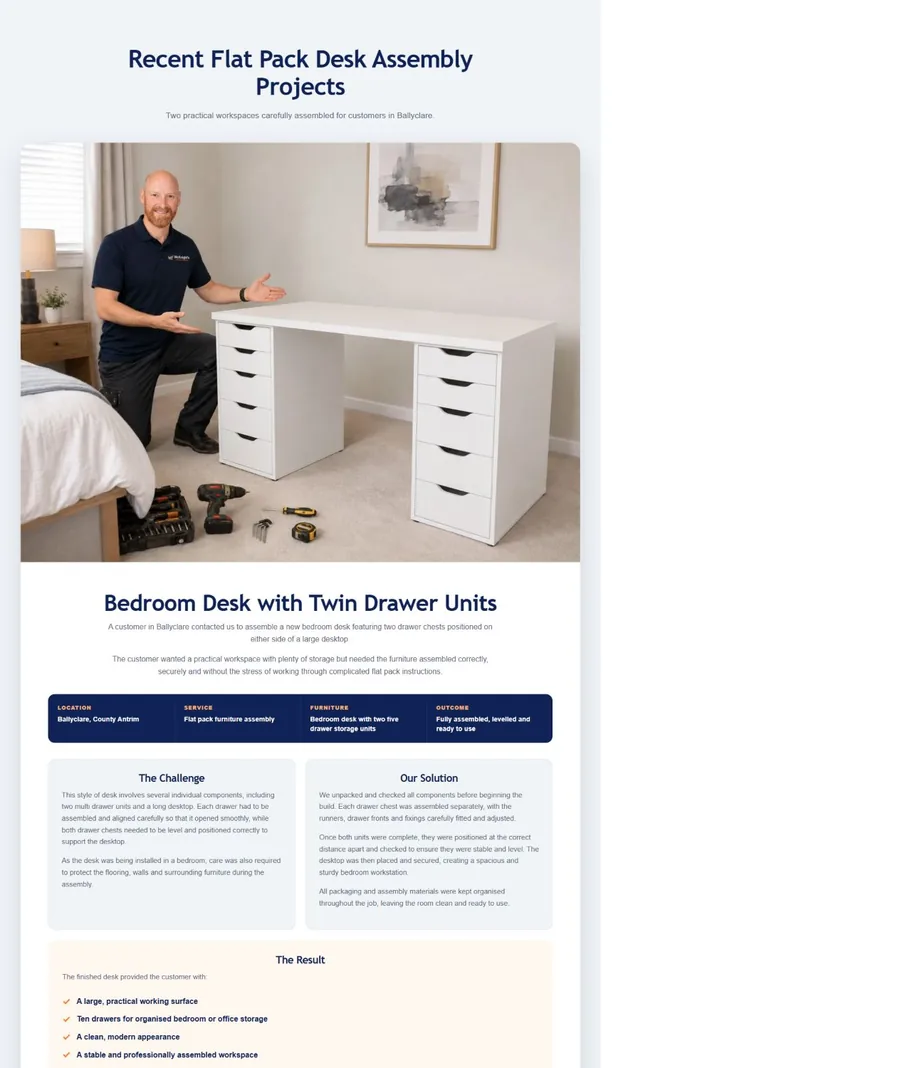
The guidance is connected to real implementation Let's Buzz Media follows the Local SEO development of a real local business rather than relying only on examples created for an article. The principal live project is McKnight's Flat Pack Assembly, a service-area business based in Ballyclare, Northern Ireland.
It provides a practical setting for website architecture, service-area SEO, Google Business Profile, reviews, location pages, project content and measurement. The case study is not treated as proof that every business will get the same result.
It is a longitudinal record of what was done and what happened afterwards. Tools should help with decisions, not create impressive-looking scores The resource includes practical checklists, audits and qualification tools.
The aim is to help a business owner decide what to do next, not give every website a mysterious score out of 100. Use Tools & Resources for the practical side of the site.
Failed and inconclusive ideas still count as evidence A case study becomes less useful if it only records wins. If a change produces no clear effect, if several things changed at once, or if the data is too weak to support a conclusion, that belongs in the record.
Who is behind Let's Buzz Media
Let's Buzz Media is run by Mark McKnight. Mark has been building websites and working with search engine optimisation since 2008.
More recently, that work has been applied directly to local-business projects, including the creation and ongoing development of McKnight's Flat Pack Assembly. That practical combination matters to the purpose of this site.
The content is written from the perspective of someone who has to make real implementation decisions: which pages should exist, how a service-area business should be represented, what to measure, how to avoid creating thin geographic content, and how to separate a useful observation from an overconfident claim. The site does not rely on inflated labels or claim qualifications that do not exist.
Relevant experience is useful; evidence still has to stand on its own.
The live business case study
McKnight's Flat Pack Assembly is useful because it is a real operating business with ordinary constraints. It is a one-person furniture assembly service that travels to customers.
The service model affects what work can be accepted, how the website is structured, how the Google Business Profile is configured, what geographic expansion is realistic and how enquiries need to be measured. The website has been built around real service categories, selected service areas and manufacturer-specific intent rather than a generic set of town pages.
That work, and the measurements that follow it, give Let's Buzz Media a genuine implementation record to reference. Read the case-study programme for how projects are documented, or go directly to the McKnight's Flat Pack Assembly live case study.
How guidance is published
The short version is simple:
- Google confirms - current first-party documentation supports the statement.
- Industry evidence - independent research or repeated practitioner evidence supports a view, but it is not an official Google statement.
- Our observation - the claim is limited to what the live project or another first-hand record actually shows.
- Not established - available evidence is not strong enough for a definite conclusion.
The Methodology explains how those labels are applied. The Editorial Policy explains source standards, corrections, AI-assisted writing, commercial disclosures and case-study integrity.
What Let's Buzz Media is not
It is not a promise of number-one rankings. It is not a network of mass-produced city pages created simply because a keyword can be combined with a place name.
It is not a disguised affiliate list in which commercial relationships determine the editorial conclusion. It is not a claim that one business case study proves a universal Local SEO rule.
And it is not a Local SEO agency lead-generation site. The primary purpose is education, resources and documented implementation.
Where to go next
If you are new to the site, use Start Here to choose the right route. If you want the broad subject, go to the Local SEO guide.
If you want to see the practical project, follow the live case study. If you want something you can work through, open Tools & Resources.